A manufactured crisis: Who really benefits from South Africa's anti-foreigner frenzy?
The torches are flaming again. The banners are rolling out. And the same old scapegoats are being rounded up.
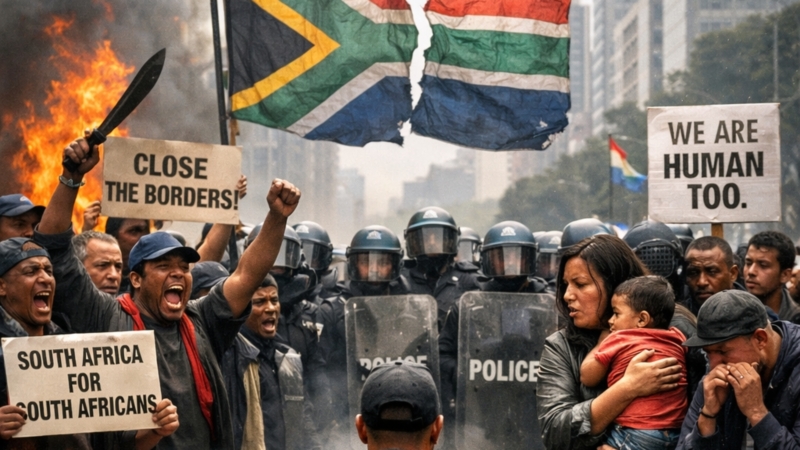
In recent weeks, South Africa has watched the March and March movement, supported by ActionSA and Operation Dudula, march through Pretoria, Johannesburg, and beyond, demanding that undocumented foreigners "go back to their countries". Operation Dudula, which translates to "push out" or "force out," emerged in Soweto in 2021 and has since evolved into a quasi-political force, even registering as a political party to contest the 2026 municipal elections. March and March, founded by Durban media personality Jacinta Ngobese-Zuma after her radio contract was not renewed, has grown like wildfire, organising increasingly bold anti-migrant marches with little pushback from authorities.
Let us be clear: this is not a spontaneous eruption of "grassroots frustration." We have been here before. The 2008 attacks killed 62 people. Xenowatch has documented hundreds of xenophobic incidents and over 600 deaths since the end of apartheid. But the current iteration—coordinated, structured, and remarkably well-resourced—looks, feels, and smells like something far more sinister. The "grassroots" label no longer fits when the marches are led by media personalities, supported by formal opposition parties, and capable of mobilising hundreds of people across multiple provinces simultaneously. This level of organisation suggests funding, direction, and an agenda that extends far beyond a genuine citizen grievance.
Look at whose ox is being gored
If the problem is really the dominance of foreign nationals in the economy, why are the marchers not camped outside the estates of Clifton or the boardrooms of Sandton? Over 70% of agricultural land remains under white ownership. Eight of the top 10 richest South Africans are still white men. The commanding heights of the economy—the banks, the mining houses, the monopoly industries—remain firmly under the control of a white capitalist minority. But you will not see March and March marching against that. You will not see them raising samboks to demand land redistribution or the dismantling of oligopolistic control.
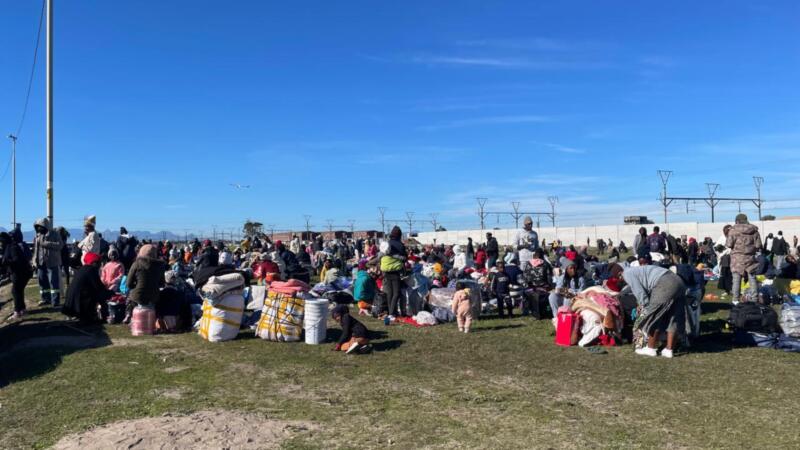
Instead, their fury is reserved for a Somali shopkeeper in Port Elizabeth, shot dead in his own store. Or a Pakistani-owned spaza shop in Dobsonville, threatened with closure. Or a group of Zimbabwean refugees, huddled in a building in Hillbrow, whose only crime is trying to survive. This is not economic activism. This is targeted, organised xenophobia with a very specific target: poor, black, African economic migrants. It is anti-African, anti-black, and a disgrace to the continent that gave us our freedom.
Who benefits when the spaza shops burn? Let us follow the money
The township economy is valued at more than R600 billion, contributing over 6% to South Africa's GDP. Within that vast informal market, spaza shops—over 150,000 of them—serve 11 million people and contribute 33% of the country's fast-moving consumer goods market. This is a prize worth fighting for. And someone is.
Shoprite, Africa's largest retailer, plans to open more than 300 stores in its 2026 financial year, aggressively expanding into townships through its Usave discounter brand. Boxer, owned by Pick n Pay, is planning more than 500 new stores over the next seven years, with the explicit goal of formalising grocery shopping in underserved areas. For these retail giants, the ideal scenario is a township with fewer informal competitors. Every spaza shop that is driven out of business by harassment, extortion, or vigilante violence is a customer who must now walk to the nearest Shoprite. The question is uncomfortable but necessary: whose campaign chest is funding the very organisations that are softening up the competition?
The selective amnesia of the "we fought for our freedom" crowd
Perhaps the most galling refrain from the marchers is that foreigners "must go to their countries and fight their governments, just like our forefathers did". This is historically illiterate and morally repugnant.
During our darkest hours, when apartheid forces were murdering activists, bombing neighbouring capitals, and unleashing Renamo terrorists on Mozambique, the Frontline States—Angola, Botswana, Lesotho, Malawi, Mozambique, Swaziland, Tanzania, Zambia and Zimbabwe—took in thousands of South African refugees. They sacrificed not just critical resources, but human lives to see the end of apartheid on the African continent. South African forces crossed into Lesotho in 1982 and massacred 42 South African refugees and Lesotho nationals. The countries that sheltered us in our hour of need did not demand that we "go back and fight." They did not ask for permission slips or visa fees. They simply opened their arms.
To now turn around and tell the children and grandchildren of those same nations—many of whom are fleeing economic collapse, political violence, or environmental disaster—that they are not welcome here, that they must "fight" for countries that may no longer exist in any functional sense, is not just hypocrisy. It is a betrayal of the very solidarity that brought us freedom.
The invisible builders: who really built this country?
Let us also settle something else. African migrants built this country. The slaves brought from Mozambique and Madagascar built the Cape. The indentured labourers from India built the sugar plantations of KZN. And today, foreign nationals—documented or not—are driving vast portions of the informal economy. According to SARS records as of June 2025, there are over 911,000 foreign individuals registered for tax, contributing an average of R27.4 billion in tax revenue from a taxable income of R83.5 billion over a three-year period.
The 2022 Census found that foreign nationals make up approximately 3.9–5.1% of the population—around 2.4 million people. But these numbers do not capture the reality of who these people are. Most undocumented foreign nationals live in the same squalor, the same cramped backrooms, the same leaky shacks as their South African neighbours. They eke out a living doing the menial jobs that many locals refuse: cleaning, loading, digging, hauling, begging, hawking. What sets them apart is not privilege or unearned advantage. It is grit, it is ingenuity, it is the desperate will to survive, and it is the tightly knit supportive networks that allow them to pool resources in ways that atomised local households often cannot.
When a foreign national opens a spaza shop, he is not stealing a job from a South African. He is creating a node of economic activity in a neighbourhood where there was none. He is employing local youngsters to sweep, stack shelves, and run deliveries. He is paying rent to a local landlord. He is buying stock from local wholesalers. He is part of the ecosystem. To burn his shop down is to burn your own neighbourhood's economic oxygen.
A credible alternative to chaos
None of this means that the current situation should be left untouched. Yes, there must be better border control. Yes, undocumented migration must be regulated. Yes, the government has failed to manage immigration effectively, and yes, the unemployment rate—officially 31.9%, with youth unemployment hovering around 60%—is a national emergency that requires every tool at our disposal.
But there is a stark choice ahead. The path of the militants—mass deportation, vigilante justice, the shutting down of informal businesses—will not create a single sustainable job. It will simply replace the current chaos with even more chaos. It will shatter diplomatic relationships with our neighbours, decimate the informal economy, and leave millions even poorer without any alternative structure to catch them.
The alternative path is one of economic integration, collaboration, and smart regulation. The government has already taken steps in this direction. The National Labour Migration Policy, approved by Cabinet in May 2025, introduces employment quotas for documented foreign workers in key sectors and restricts foreign ownership of small enterprises, precisely to prioritise local employment while acknowledging the reality of cross-border labour mobility.
But we can go further. Imagine a formalised spaza shop sector where every foreign-owned business is required to meet local equity targets—say, 30% South African ownership. Imagine employment targets that require a certain percentage of local hires, with penalties for non-compliance and incentives for exceeding targets. Imagine government-sponsored mentorship programmes where established South African informal traders are paired with foreign entrepreneurs to share skills, market access, and supply chains. Imagine tax compliance and formal registration that opens the door to state-backed micro-loans, business development services, and protection from both criminal extortion and vigilante violence.
This is not fantasy. It is how every successful informal economy in the world has been integrated into the formal mainstream. It is how chaos is transformed into a viable, lucrative growth sector that stimulates the economy, expands the tax base, increases revenue for service delivery, and creates genuine, sustainable opportunities for South Africans and foreign nationals alike.
The real threat to the republic
Let me end with this. The real threat to South Africa is not a Somali shopkeeper or a Zimbabwean street vendor. It is the deliberate, well-funded, politically orchestrated campaign to turn neighbour against neighbour, to channel legitimate economic frustration into a narrow, tribalistic, anti-black fury, and in doing so, to destabilise the country for purposes that have nothing to do with jobs or safety.
These right-wing militants are not freedom fighters. They are not patriots. They are the useful idiots of an agenda that wants to see South Africa burn. And we should name them for what they are: agents of chaos, funded by interests that benefit from a divided, destabilised, xenophobic South Africa. The frontline states did not sacrifice their sons and daughters so that we could turn into Trump's America, where families are separated and children born in the land of their grandparents are made to feel like strangers.
We are better than this. Or at least, we used to be.
Opinion by
Imraahn Ismail Mukaddam
Assisted by deepseek Ai.